


The charter
Zone law agreed with the host state and written into its legislation: who governs the Kontor, by what rules, and how disputes are settled.
Hansa, a Mercatoria platform
For Europe's family offices and foundations, its pension and insurance capital, and the entrepreneurs of its north and center. For three centuries, towns from the Zuiderzee to the Gulf of Finland governed themselves and traded as partners. Hansa builds new cities on the same terms.
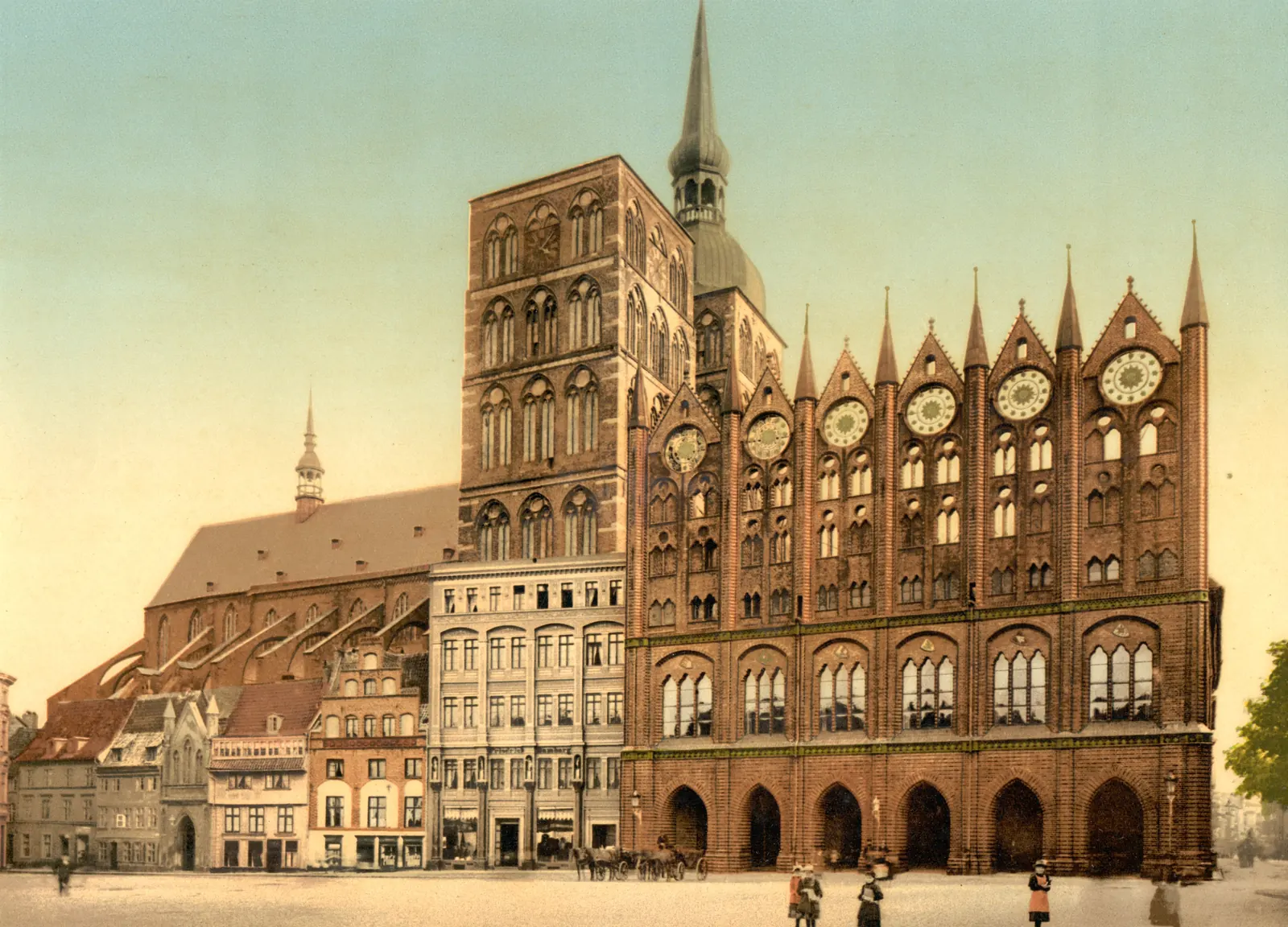
From the thirteenth century to the fifteenth, the trade of Northern Europe was led not by a king but by merchants and their towns. The word hansa meant a band or company. It named groups of German merchants who traveled and traded together abroad, and from the second half of the fourteenth century a league of towns: Lübeck, Hamburg, Bremen, Cologne, Danzig, Riga and dozens more.
Each town was governed by its own council. Their envoys met in a diet, the Hansetag, most often at Lübeck. Historians count some 170 such assemblies between 1358 and 1669. Decisions were taken by consensus. When the envoys could not agree, they adjourned and took the question home to their councils.
The League kept no standing army and no permanent administration, and until the sixteenth century no common treasury. It created a single office of its own, that of syndic, only in 1556. A town rarely joined by formal admission. It grew into the League through its trade, and it could be shut out for defying common decisions.
The League was no moral utopia. It waged war and blockade, and where it was strong it held hard monopolies. What lasted were the institutions it built.
Sources: Hansischer Geschichtsverein, Hanselexikon: Hansetage, Hansestadt, Hansekasse, Hansesyndikus, Konsensprinzip, Verhansung; Britannica, Hanseatic League; Hanseatic League.
Lübeck's earliest town law drew on that of Soest in Westphalia. At its height more than a hundred towns, from Schleswig-Holstein to Estonia, lived under Lübeck law and could take their cases to Lübeck's council, their higher court.
It was a law for merchants and seafarers. Early on it moved from sworn oaths of reputation to proof by witnesses and documents. In parts of its range it stayed in force until 1900, when the German Civil Code replaced it.
Other towns kept laws of their own. In 1497 Hamburg's council had its town law revised and set down anew, with the law of ships built in.
Sources: Hanselexikon, Lübisches Recht and Hamburger Stadtrecht von 1497; Lübeck law; Library of Congress, the Hamburg municipal code of 1497.
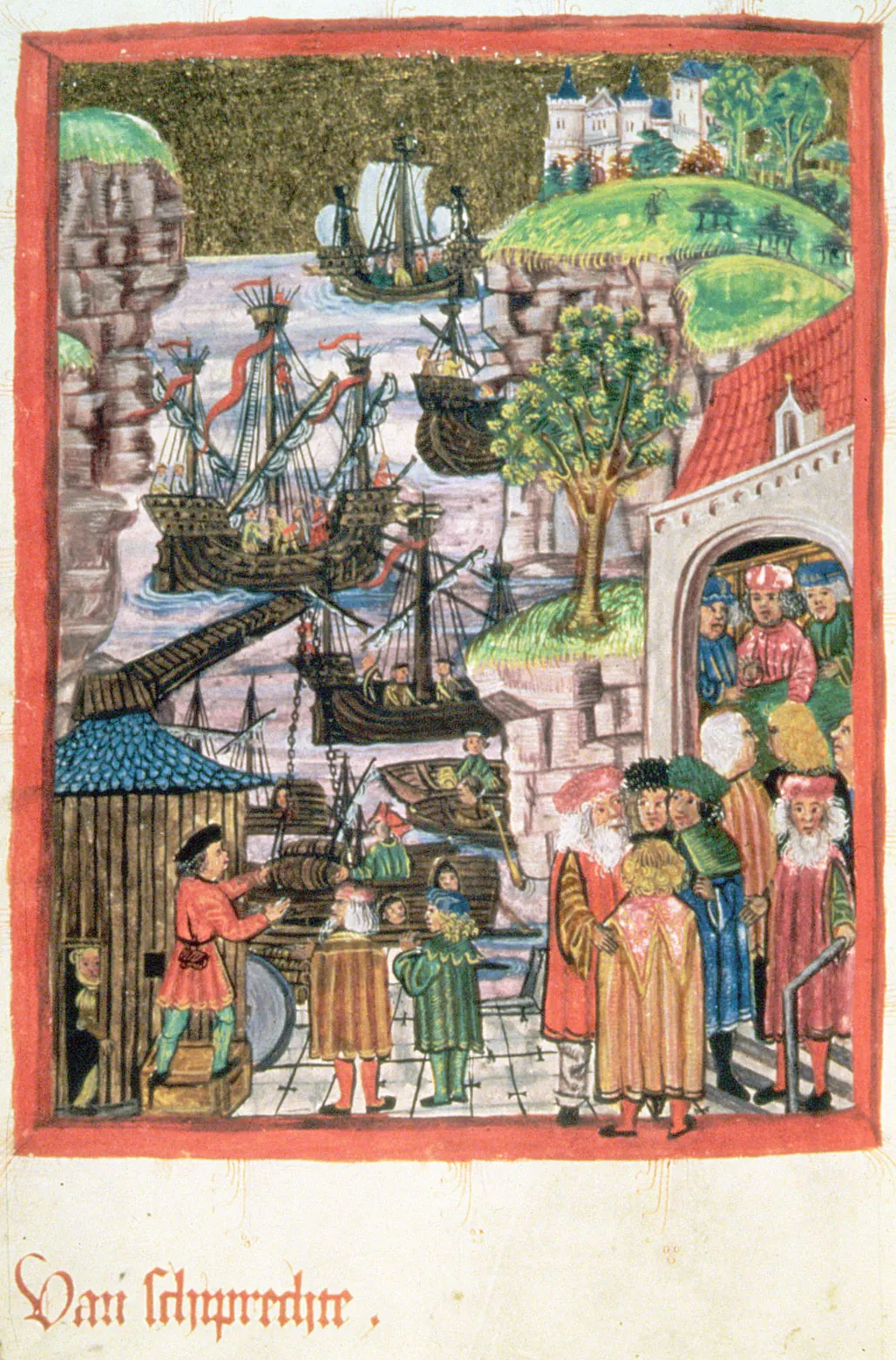
Abroad, the League's merchants lived and traded in Kontore: four great ones at London, Bruges, Bergen and Novgorod, and smaller posts elsewhere. Each rested on privileges from the ruler of the host country, which commonly included relief from tolls, their own scales, safe conduct, quick trials, and the right of a merchant who died abroad to leave his goods to his heirs.
Each Kontor governed itself. Its merchants elected aldermen every year and kept a common purse, funded by a levy on their trade. They wrote their rules down. Every newcomer swore to keep them, and they were read aloud to the assembly at set times so that no one could plead ignorance. The worst offenders were expelled and lost their share in the privileges.
The rules faced outward too. A Kontor policed its own members, so that the host had no pretext for reprisals over customs fraud or broken terms of sale.
A privilege lasted as long as the host found it useful. As local merchants grew stronger they came to see the League's privileges as a monopoly, and rulers stopped confirming them. The Grand Prince of Moscow closed the Novgorod Kontor in 1494. Elizabeth I revoked the Steelyard's privileges in London in 1598.
Sources: Hanselexikon, Kontor, Kontorordnungen, Privilegien der Hanse, Peterhof in Novgorod; Steelyard.
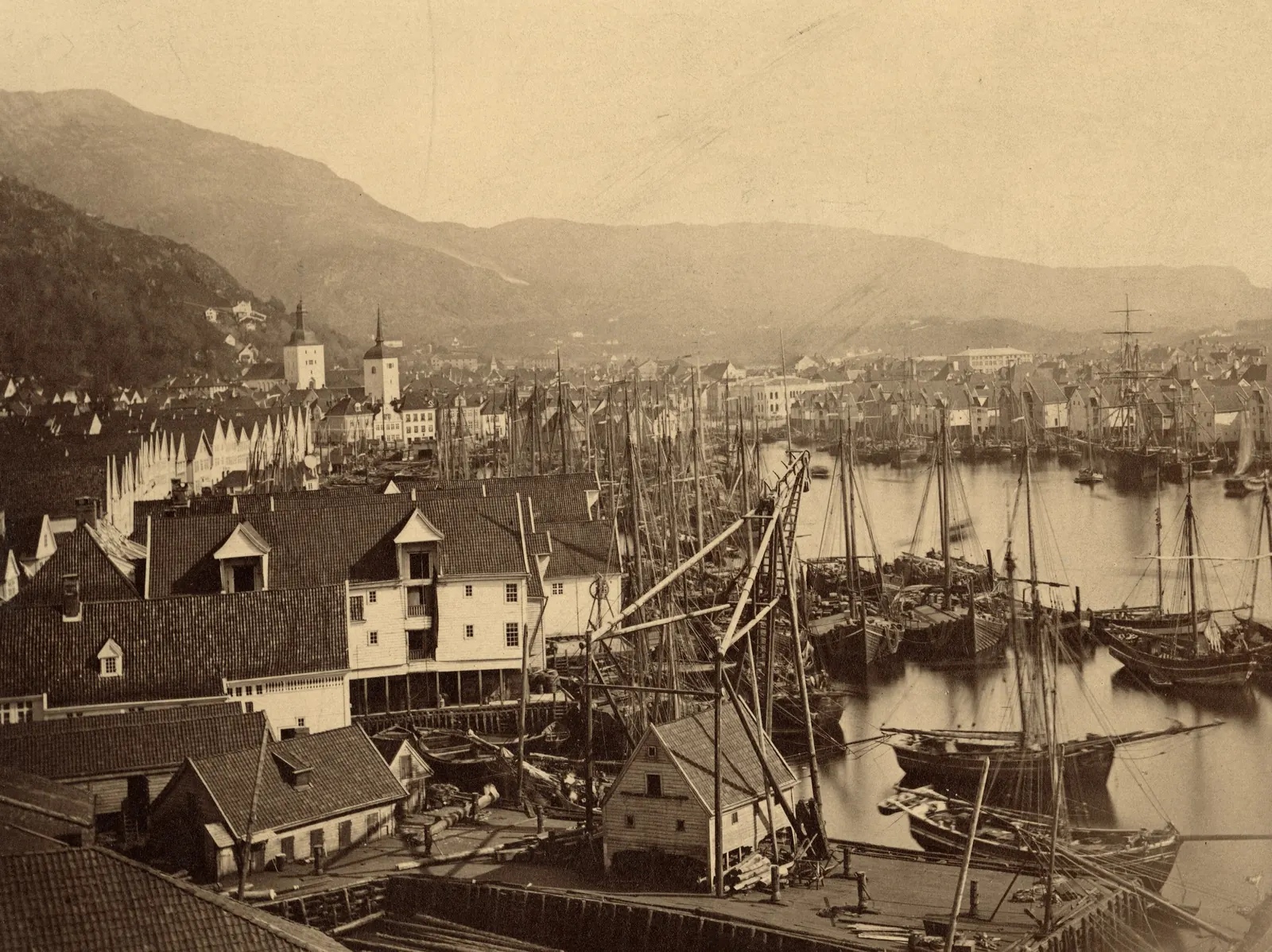
In Bergen the Kontor filled the wooden merchant houses along the harbor, the wharf known as Bryggen. From about 1350 to 1754 its merchants bought the dried cod of northern Norway, the stockfish, and sold grain in return.
It was also the League at its hardest. The Kontor kept the trade with northern Norway to itself, and most of the Norwegians who brought in the fish were in debt to particular merchants and bound to them.
Bryggen burned in 1702 and was rebuilt in the old form. Some sixty buildings remain. It has been a World Heritage Site since 1979.
Sources: Store norske leksikon; Hanselexikon, Deutsche Brücke; UNESCO, Bryggen.
Trade at a distance runs on trust. Economic historians call it the fundamental problem of exchange: trade happens only where partners can credibly promise to keep their agreements. The Hanseatic towns answered it with institutions as much as with character.
In Lübeck the council kept a town book on the ground floor of the town hall. Merchants entered their debts in it, and the founding and closing of their partnerships. Most partnership entries followed one formula: one partner has so much, against which the other has laid so much. One partner then traded the pooled sums on joint account. A debt written in such a book could be enforced without lengthy proof. The book survives in 348 volumes, from the early fourteenth century to 1810.
The ideal had a name: the honorable merchant. Hamburg's merchants date their assembly to 1517, when the town council let them elect a board of their own. In 1665 it created the deputation from which Hamburg's Chamber of Commerce grew. It was long known as the Versammlung Eines Ehrbaren Kaufmanns, the Assembly of the Honorable Merchant. Under a newer name, for honorable merchants in the plural, it still meets on the last working day of every year.
Sources: Hanselexikon, Vertrauen, Niederstadtbuch, Schuldbücher, Wedderlegginge, Kaufmannsporträt; Versammlung Ehrbarer Kaufleute zu Hamburg; Handelskammer Hamburg, year-end assembly of 31 December 2025.
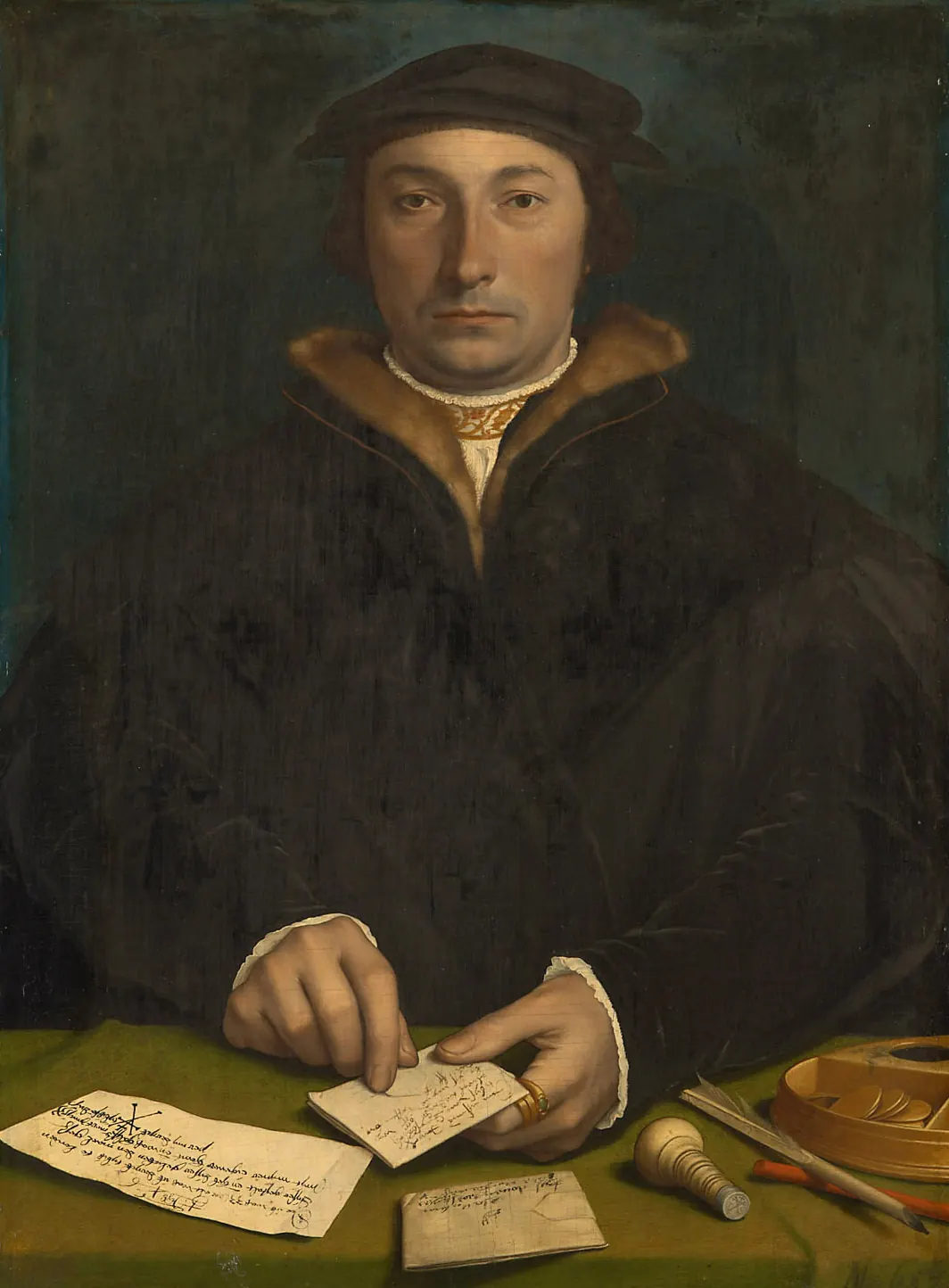
Your word was your capital. Your reputation outlived you.
The League was never dissolved. As territorial states grew stronger it lost its old monopoly, and in July 1669 only nine towns took part in the last Hansetag. Lübeck, Hamburg and Bremen carried its name on, and still signed trade treaties together in the nineteenth century. Hamburg and Bremen remain Free Hanseatic Cities and states of Germany. Hamburg's license plates still begin HH, for Hansestadt Hamburg.
In 1980 towns of the old league founded a new one at Zwolle. It counts almost two hundred member towns in sixteen countries, and in June 2026 it held its forty-sixth Hanseatic Day, at Stargard in Poland.
Hansa brings the same design to new cities. Each zone is a Kontor: chartered by its host state and living under that state's law, with written rules its members and investors can read. Kontors keep common standards of governance, disclosure and dispute resolution. Partners invest alongside one another, in stages, as each Kontor meets its milestones. And the protections are agreed before the first stone, so that no Kontor rests on a privilege alone.
Sources: Hanselexikon, Ende der Hanse, Hansetag, Erster; Hansetag, letzter, Stralsunder Friede; Die Hanse, the Union of Cities and International Hanseatic Day; German vehicle registration codes.
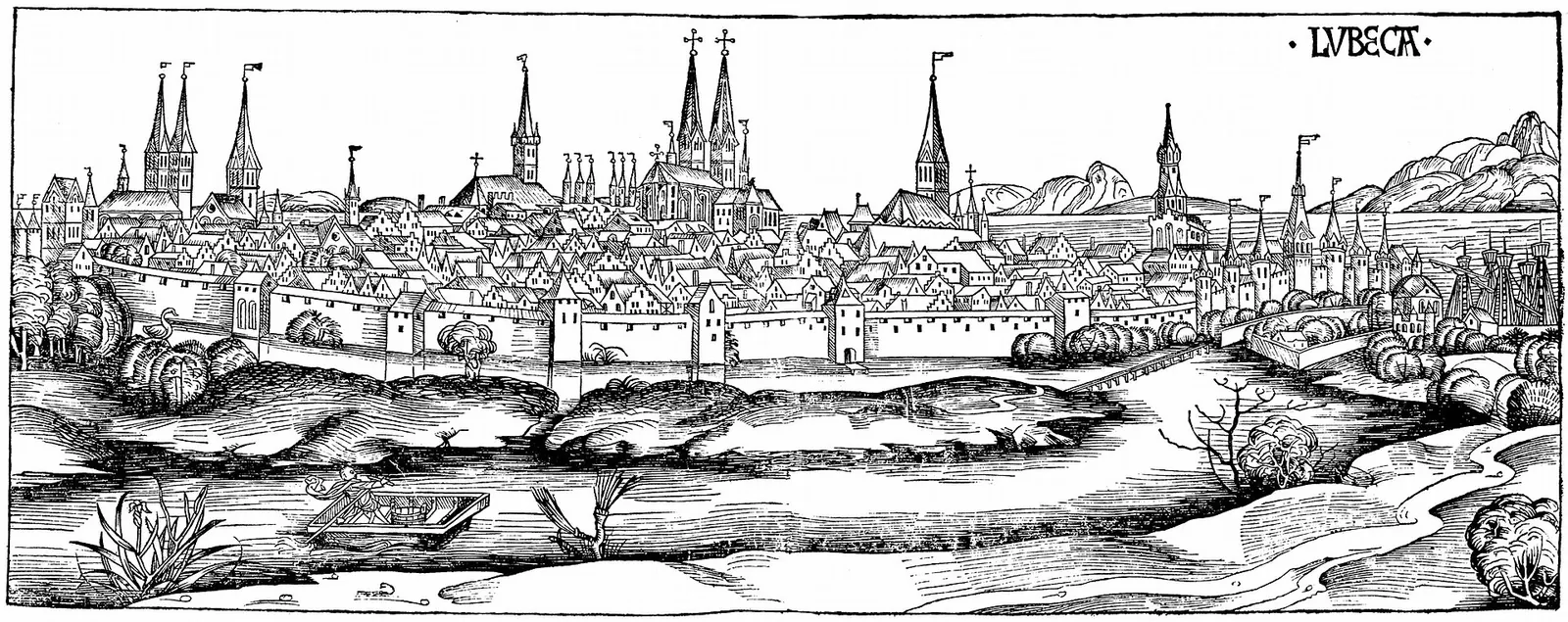
Zone law agreed with the host state and written into its legislation: who governs the Kontor, by what rules, and how disputes are settled.
Access to a network of capital partners who invest alongside one another, staged against milestones each Kontor has met. Mercatoria advises; it does not manage funds.
Treaty access, arbitration and political risk cover agreed before the first stone, and standards held in common across the Kontors.
Anchor industries, supply chains and the people to run them, so that each Kontor earns its place in the network from the first year.
Every Hansa engagement is led by a partner with standing in Northern and Central Europe, under a written mandate. It begins with a private conversation and a written scope.
Hansa, a Mercatoria platform