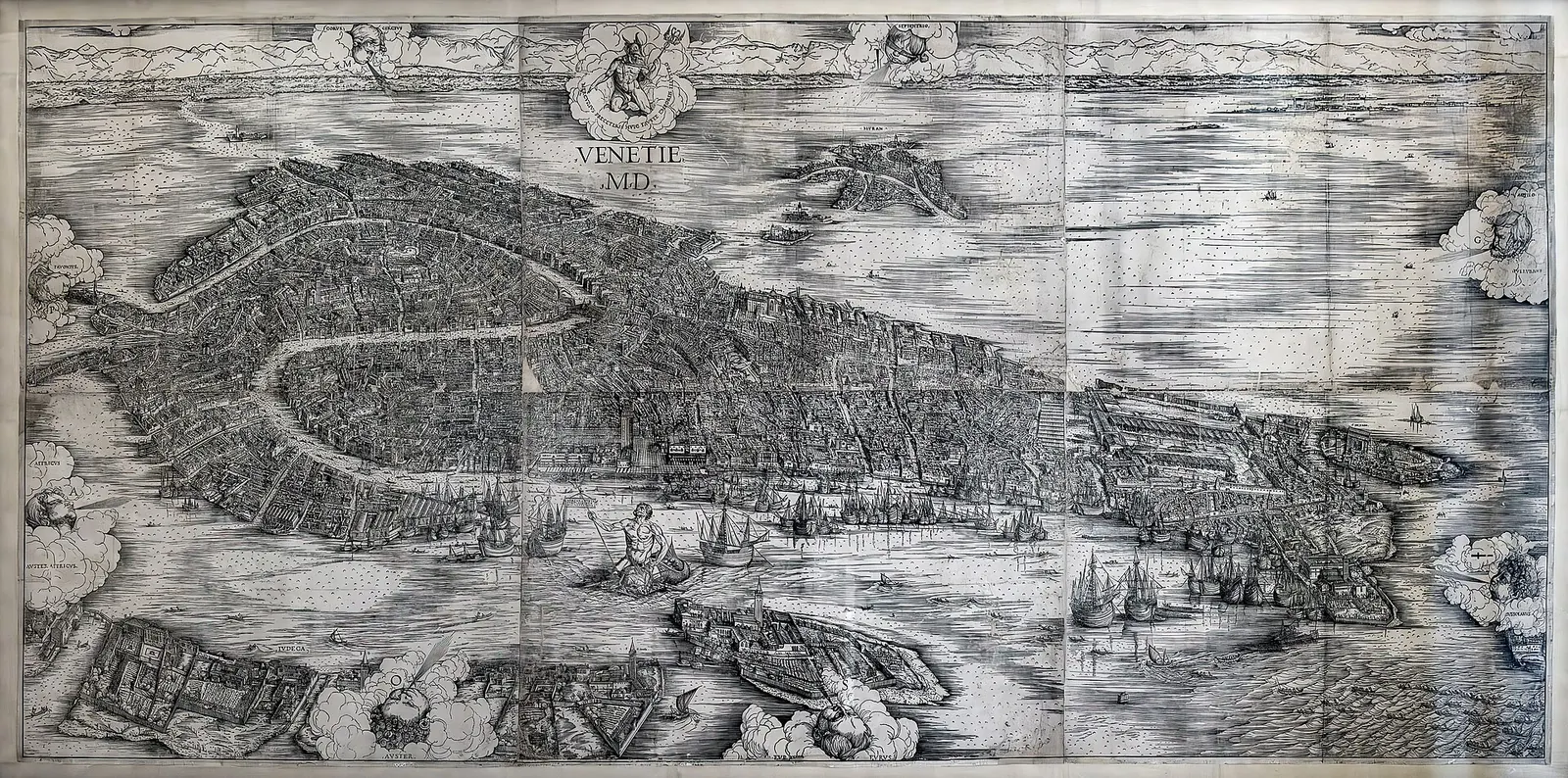
_-_Google_Art_Project.jpg)
_View_of_Venice_by_Jacopo_de%27_Barbari_-_Museo_Correr.jpg)

Governance
Written rules, courts that work and offices that no one person controls.
Serenissima, a Mercatoria platform
A place built to last,
for families who plan to.
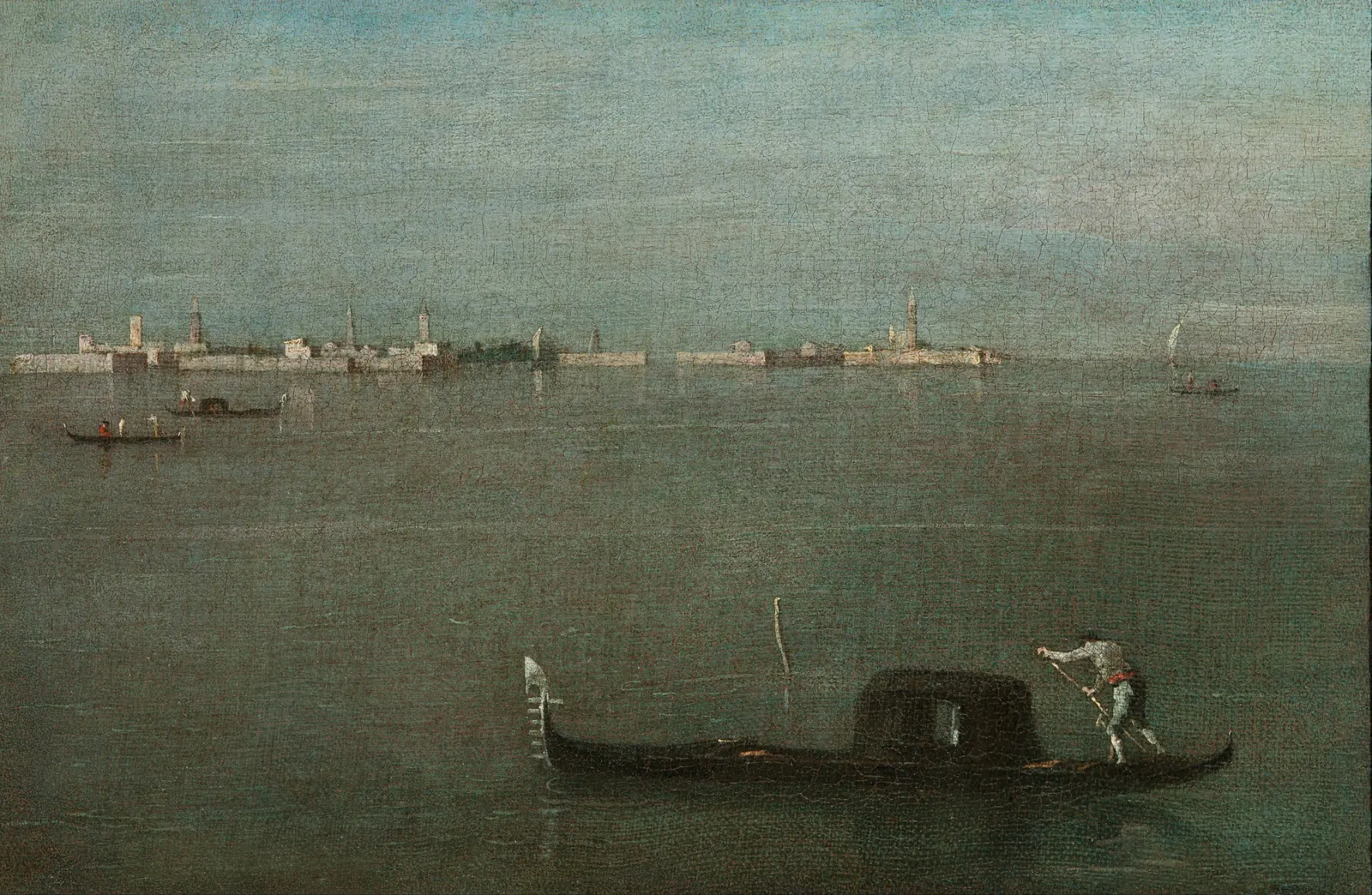
In the fifth and sixth centuries, as Roman rule in the West came to an end, armies crossed northern Italy again and again. Families from the mainland cities, Aquileia, Altinum and Padua among them, moved out to the islands of the lagoon: mud and marsh, until then the home of fishermen and salt workers.
In 537 the Roman statesman Cassiodorus wrote to the maritime tribunes of the lagoon, in the first written notice of the settlements. He recalled their homes scattered across the water, made firm by the care of the people who built them.
Here after the manner of water-fowl have you fixed your home.
Sources: Britannica, Venice: history; History of the Republic of Venice, origins; Cassiodorus, Variae XII.24, translated by Thomas Hodgkin, 1886.
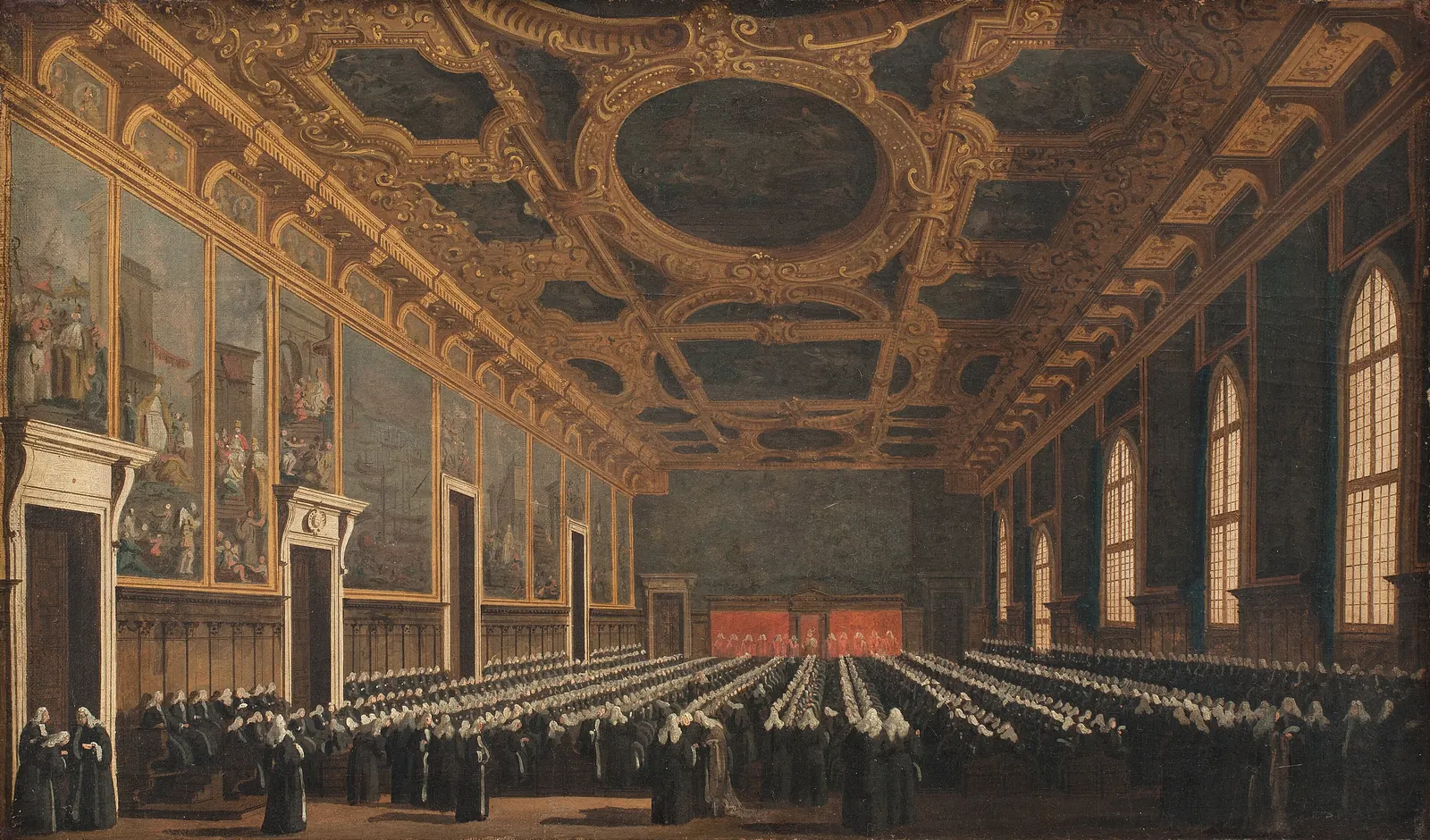
Tradition holds that the lagoon chose its first doge in 697. The republic endured until 1797. From the twelfth century its supreme body was the Great Council, drawn from the city's patrician families, and the doge it elected held office for life, bound by an oath that limited what he could do.
Before 1268 the office had passed from father to son six times. From 1268 the council chose each doge in ten rounds of lot and vote, and no family could hold two seats in any round.
The election of a doge, as fixed in 1268
The Great Council Every member aged thirty or more could be drawn. Ten rounds follow.
Sources: Britannica, doge; Great Council of Venice; the republic's end, 12 May 1797; Mowbray and Gollmann, Electing the Doge of Venice, 2007; Molinari, How the Republic of Venice Chose Its Doge, 2020; Merriam-Webster, ballot.
Venice welcomed newcomers on its own terms. From 1228 German merchants lived and traded at the Fondaco dei Tedeschi beside the Rialto, in rooms assigned by a Venetian official.
Serenissima introduces families to new cities that welcome them the same way. It looks for four things in each.
Written rules, courts that work and offices that no one person controls.
Protection in law and in structure: commitments agreed with the host state before anything is built.
Conversations held in confidence, and only by introduction.
Cities designed to be lived in for generations, at human scale and in lasting materials.
Every city stands under the law of its host country. What a family may do there, in residence or otherwise, is set out in private, with its own counsel.
Source: Fondaco dei Tedeschi.
Serenissima works by introduction. Each conversation is private, and is led in person by a partner with standing in the city's host country.
Serenissima, a Mercatoria platform
