

.jpg)

Its own rules
Zone law agreed with the host government and written into its legislation: who governs, by what rules, how disputes are heard and how the rules may change.
Shreni, a Mercatoria platform
India's ancient guilds made their own rules, kept faith with their sovereign and held wealth in trust across generations. Shreni carries that tradition to new cities, with Indian enterprise at home and across the diaspora.
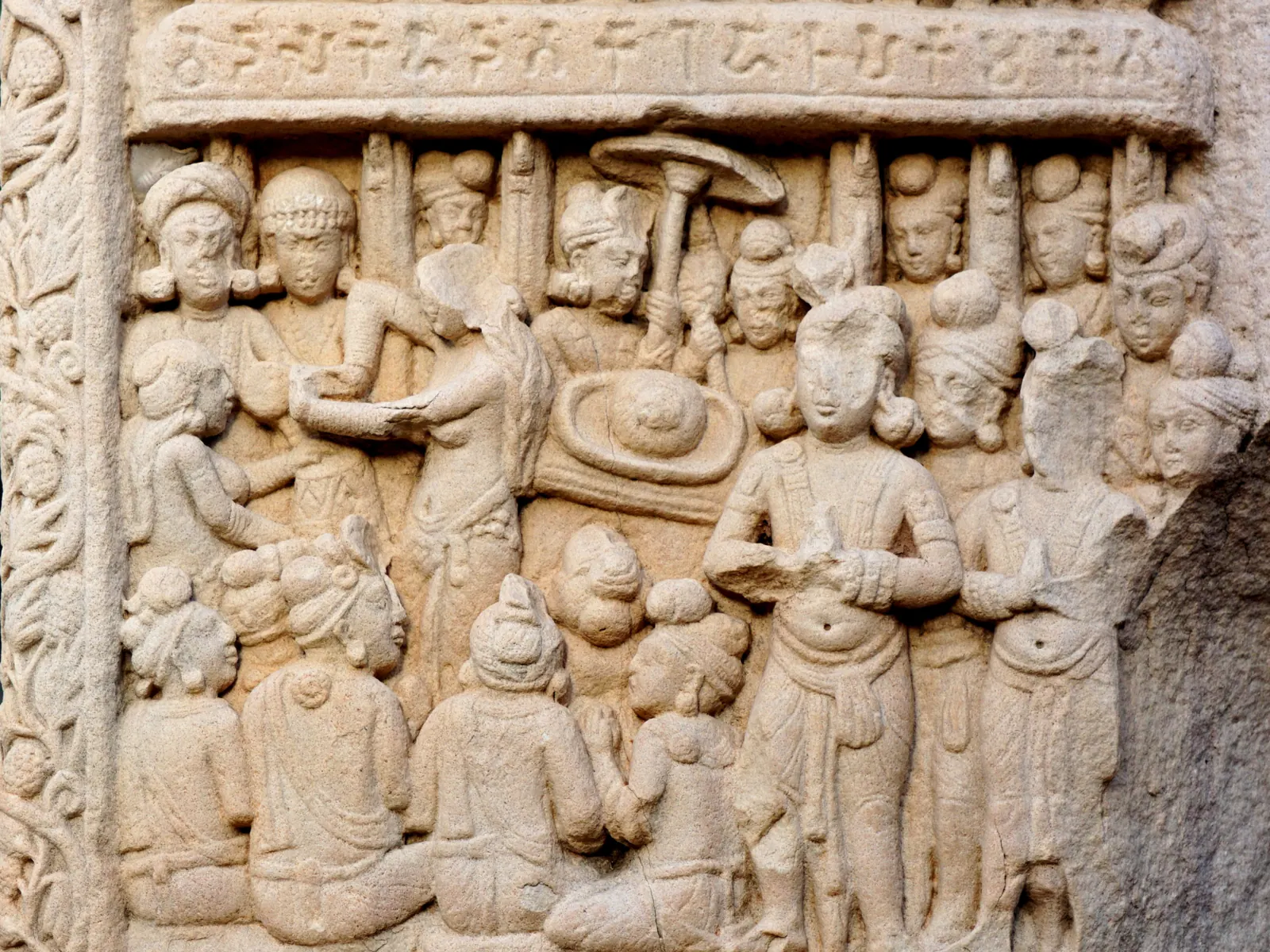
From before the common era, India's craftsmen and merchants organized themselves into shrenis: guilds of weavers, oil pressers, ivory carvers, bankers and caravan traders. A shreni had its own heads and its own assembly, and kept rules of its own.
The classical law books set out what the guild and the king owed each other. Their terms read like a charter.
Autonomous in its rules, loyal to the sovereign, answerable to its members. Shreni builds every partnership on that balance.
Sources: Narada Smriti X.2 and 3, and Brihaspati XVII.7 to 20, in Julius Jolly's translation, The Minor Law Books (1889); R. C. Majumdar, Corporate Life in Ancient India (1922); for the word, Monier-Williams, Sanskrit-English Dictionary, p. 1102.
From the law books
IMembers bind themselves to one another in writing or before arbiters, and then set to work.
IIThe king maintains the usages a guild has settled among its members.
IIIHe approves its laws, its rules of assembly and its way of earning a living.
IVWhat its appointed heads decide, he upholds. If they combine against a single member, he restrains them.
VA dispute between the heads and the members comes to him to decide.
Narada X.2 and 3; Brihaspati XVII.7 and 18 to 20
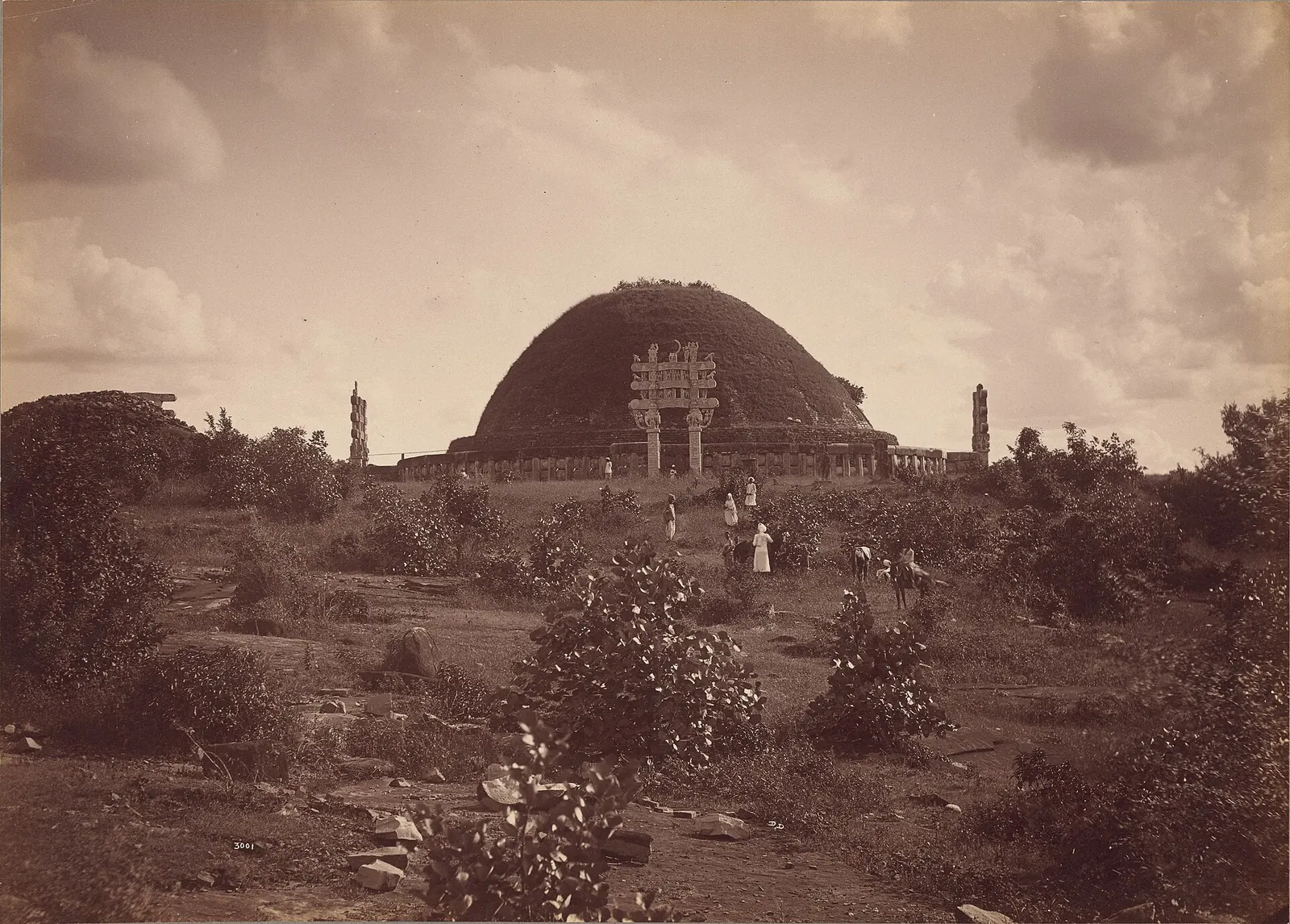
The gateways of the Great Stupa at Sanchi were raised in the first century BCE or soon after. On the southern gateway, an inscription records that one carved panel was the work of the ivory carvers of Vidisha (Plate I). Inscriptions across the gateways name the people and the guilds who contributed to them.
At Vaishali, the commonest clay sealings of the fourth and fifth centuries carry the name of a body of bankers, caravan traders and merchants. Excavators found it pressed beside the personal seals of its members.
Sources: John Marshall, A Guide to Sanchi (1918), pp. 40 and 52; T. Bloch, Archaeological Survey of India, Annual Report for 1903 to 1904, quoted in Majumdar, Corporate Life in Ancient India, pp. 43 to 45.
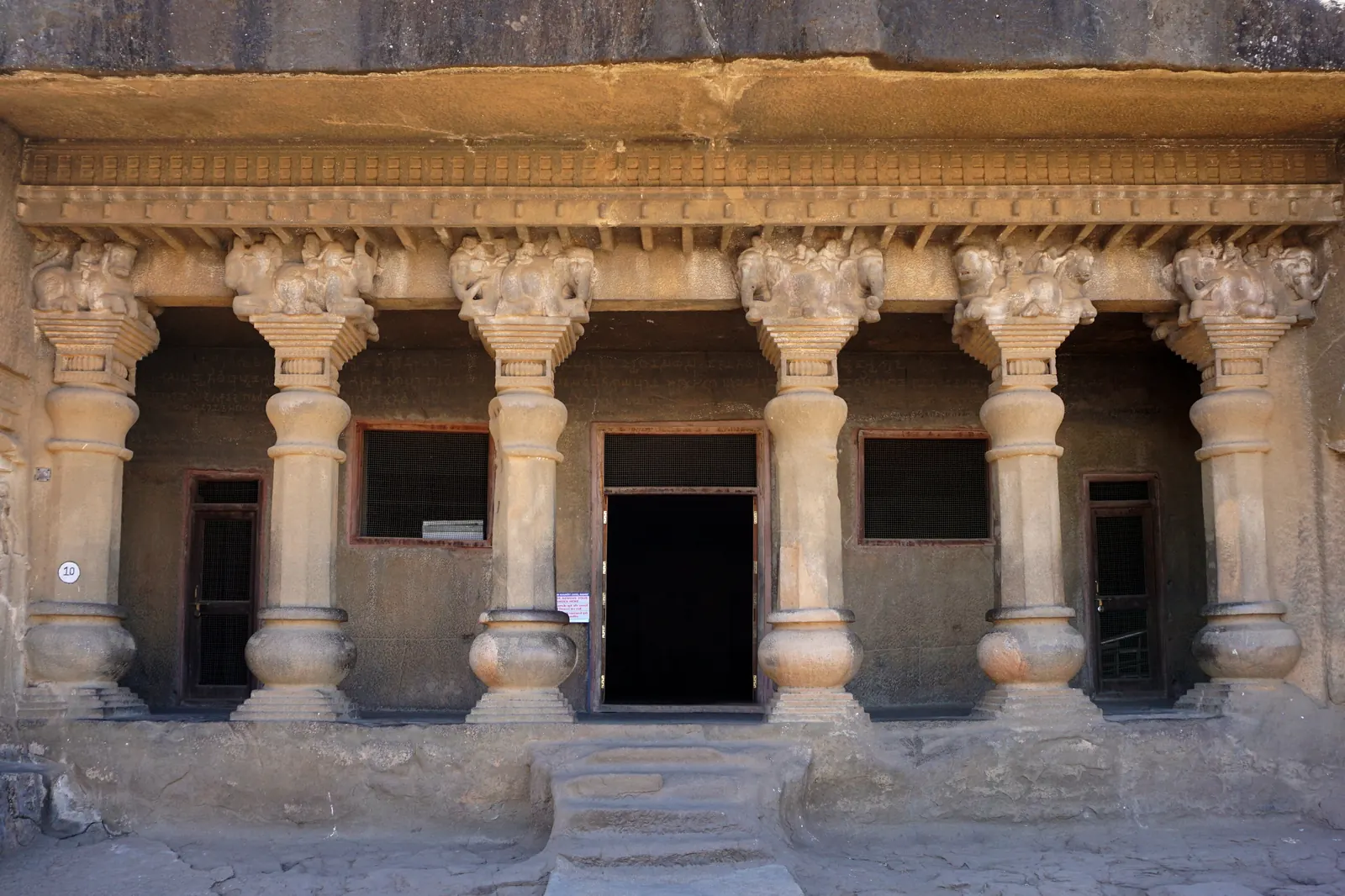
In the caves cut into the hill at Nasik, an inscription in Cave 10 records a gift made in the year 42, a date scholars place in the first or early second century CE. Ushavadata, son-in-law of King Nahapana, gave the cave to the monks and endowed it, permanently, with 3,000 karshapanas.
He did not hand the money to the monks. He deposited it with two weavers' guilds at Govardhana: 2,000 at one percent a month, 1,000 at three quarters of one percent. The guilds kept the principal and paid out the interest. The first deposit clothed the twenty monks who spent the rainy season in the cave, twelve karshapanas each a year. The second paid a further allowance.
The gift came with its own guarantee. All of it, the inscription says, was “proclaimed (and) registered at the town's hall, at the record office, according to custom.”
Source: E. Senart, “The Inscriptions in the Caves at Nasik,” Epigraphia Indica, volume 8, no. 12, pp. 82 and 83. Dating: Nahapana.
Amounts and rates as the inscription gives them. Senart reads the rates as monthly. One percent a month on 2,000 is 240 a year: twelve each for twenty monks, as the inscription assigns. Three quarters of one percent a month on 1,000 is 90 a year. Handing the money out directly is a comparison in arithmetic, not a record.
Run the endowment
A later inscription in the same caves places another endowment, for medicine for sick monks, with four guilds at Govardhana, the oil millers among them. It was invested “for all time to come.” Senart, its editor, read it as binding the guilds as they stood and “such as they will be” in future: the obligation belonged to the guild, not to its members of the day.
A gift became an institution because a guild held it. Investors ask a new city the same questions today: who holds the capital, on what terms, and where is it recorded.
Source: Senart, Epigraphia Indica, volume 8, no. 15, pp. 88 and 89.
From the ninth century, the merchant guilds of South India traded across the Bay of Bengal and beyond. Tamil inscriptions naming the Manigramam, the Nanadesis and the Five Hundred of the Thousand Directions survive from Sri Lanka to Myanmar, Thailand and Sumatra.
In 1088, at Barus on the west coast of Sumatra, the Five Hundred met and fixed the fee in gold that each ship, its captain and its crew would pay. Then they had the decision cut in stone. The historian K. A. Nilakanta Sastri described them as merchants who regulated their own affairs, owed no exclusive allegiance to any one king, and were heard with attention by kings and village assemblies alike.
The guild carried its rules abroad and earned a hearing from its hosts. Indian enterprise still crosses the sea. Indian families and firms are at home today in the Gulf, Britain, the United States, East Africa and Southeast Asia.
Sources: K. A. Nilakanta Sastri, “A Tamil Merchant-guild in Sumatra,” Tijdschrift voor Indische Taal-, Land- en Volkenkunde 72 (1932), pp. 314 to 327; Noboru Karashima's translation of the Barus inscription, quoted by S. Pathmanathan, “The Nakaram of the Nanadesin in Sri Lanka”; Ministry of External Affairs, Population of Overseas Indians.
In India
Across the sea
2015India's international financial center
In 2015 India opened its first International Financial Services Centre, in GIFT City at Gandhinagar, Gujarat. The center lies inside India but is treated as outside it under foreign exchange law, so business there is done in foreign currency and under rules of its own.
Since 2020 a single regulator, the International Financial Services Centres Authority, has held within the center the powers that India's banking, securities, insurance and pension regulators hold elsewhere. By June 2026 it counted 1,336 registrations and authorizations, $120.69 billion in banking assets and 235 fund management entities.
A place with its own rules, inside the state and in its service. GIFT City is India's own achievement, built by Indian institutions. It is the old bargain of the shreni, struck again at the scale of a financial center.
Source: International Financial Services Centres Authority, IFSCA Bulletin for April to June 2026.

The guild made its rules and the sovereign upheld them. A new city needs a charter agreed with its host, and an administration that answers to the people who live and invest there.
The guild kept the principal and paid the income, year after year. A new city needs patient capital, committed as it proves itself.
The endowment was proclaimed in the town's hall and registered at the record office. A new city's commitments must be written down, recorded and protected.
Bankers, caravan traders and merchants worked inside one network. A new city lives by its industries, its suppliers and its links to markets abroad.
Zone law agreed with the host government and written into its legislation: who governs, by what rules, how disputes are heard and how the rules may change.
Access to a network of capital partners, committed in stages as the zone meets milestones agreed in advance. Mercatoria advises; it does not manage funds.
Commitments agreed and recorded before the first building rises, with arbitration, treaty access and political risk cover, so that they outlast the people who made them.
Anchor industries, suppliers, skills and trade links, built with Indian enterprise at home and across the diaspora.
Every Shreni engagement is led by a partner with standing in India and its diaspora, under a written mandate. It begins with a private conversation and a written scope.
Shreni, a Mercatoria platform