

_-_map.png)


The compact
Charter design: a written constitution for the community, drafted with its founders, its landowners and the public bodies whose consent it needs. Who governs, by what rules, and how the rules change.
Mayflower, a Mercatoria platform
For the founders, builders, officials and capital creating new self-governing communities on American soil: chartered by consent, under the Constitution, and built to last.
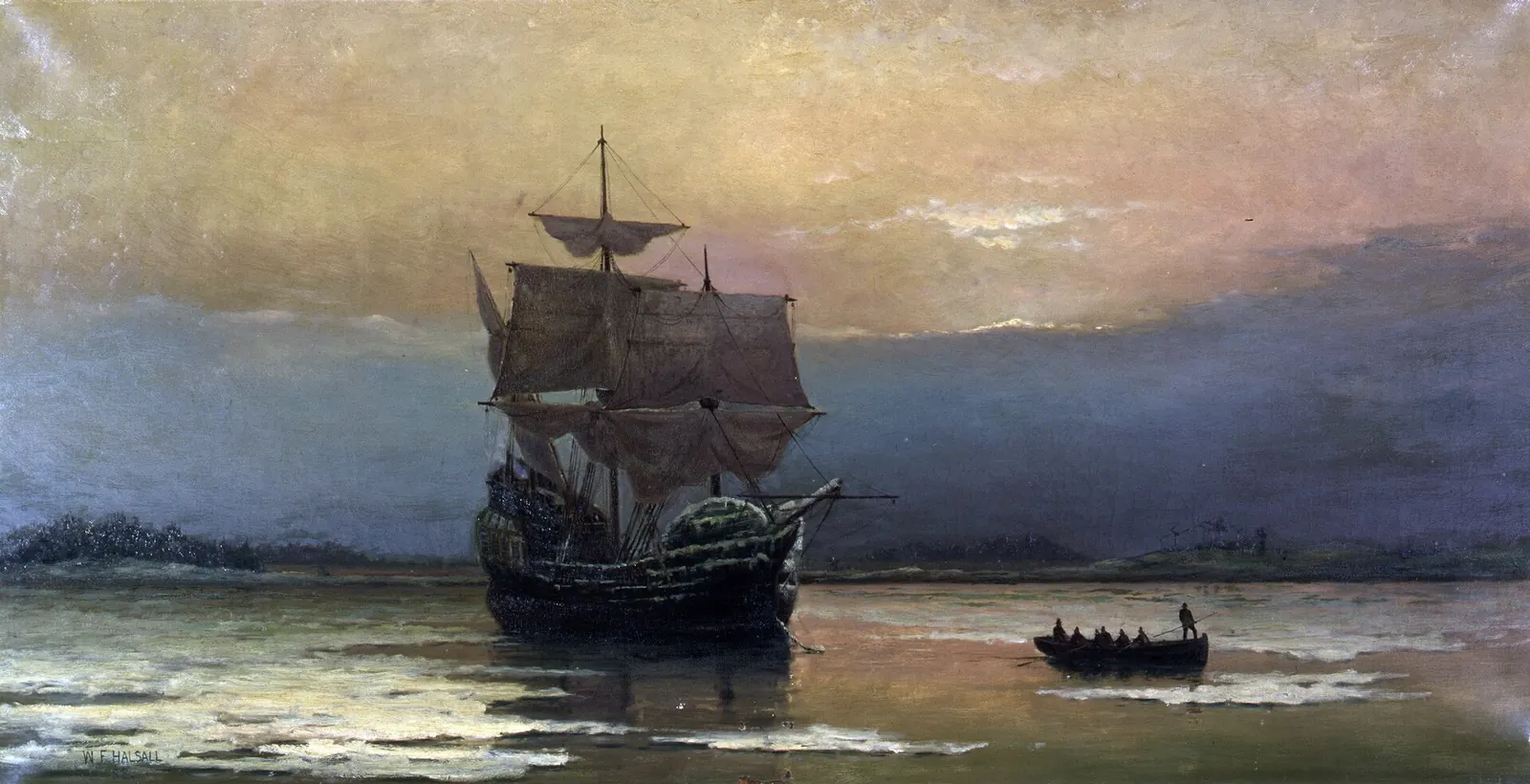
Their patent ran north to 41 degrees. In November 1620 the Mayflower made land well beyond it. Step through the days, from the patent to the Compact.
February 1620
Their patent came from the Virginia Company of London. That company’s Virginia ran north to 41 degrees, a line that crosses the Hudson a little above Manhattan. They meant to settle near the Hudson, inside it.
“a voyage to plant the first colony in the Northern parts of Virginia” The Compact
6 September 1620
The Mayflower sails from Plymouth, in England, with 102 passengers. In mid-ocean a storm bows and cracks one of her main beams. They raise it back into place with a great iron screw the passengers had brought from Holland.
“the winds were so fierce, and the seas so high, as they could not bear a knot of sail” Bradford
9 November, daybreak
After sixty-four days at sea they sight the Highlands of Cape Cod, near 41° 55′ north. That is fifty-five nautical miles past the edge of their patent.
“after long beating at sea they fell with that land which is called Cape Cod” Bradford
9 November, afternoon
They turn south for the Hudson. After half a day they are caught in the shoals of Pollock Rip, off Monomoy, with the wind failing. They bear up again for the Cape and get clear before night.
“they fell amongst dangerous shoals and roaring breakers” Bradford
11 November, daybreak
They beat back north along the Cape and round its tip. At daybreak on the 11th they lie off its great harbor, at 42 degrees north. Nothing in their patent reaches this far.
“a harbor wherein a thousand sail of ships may safely ride” Mourt’s Relation
11 November 1620
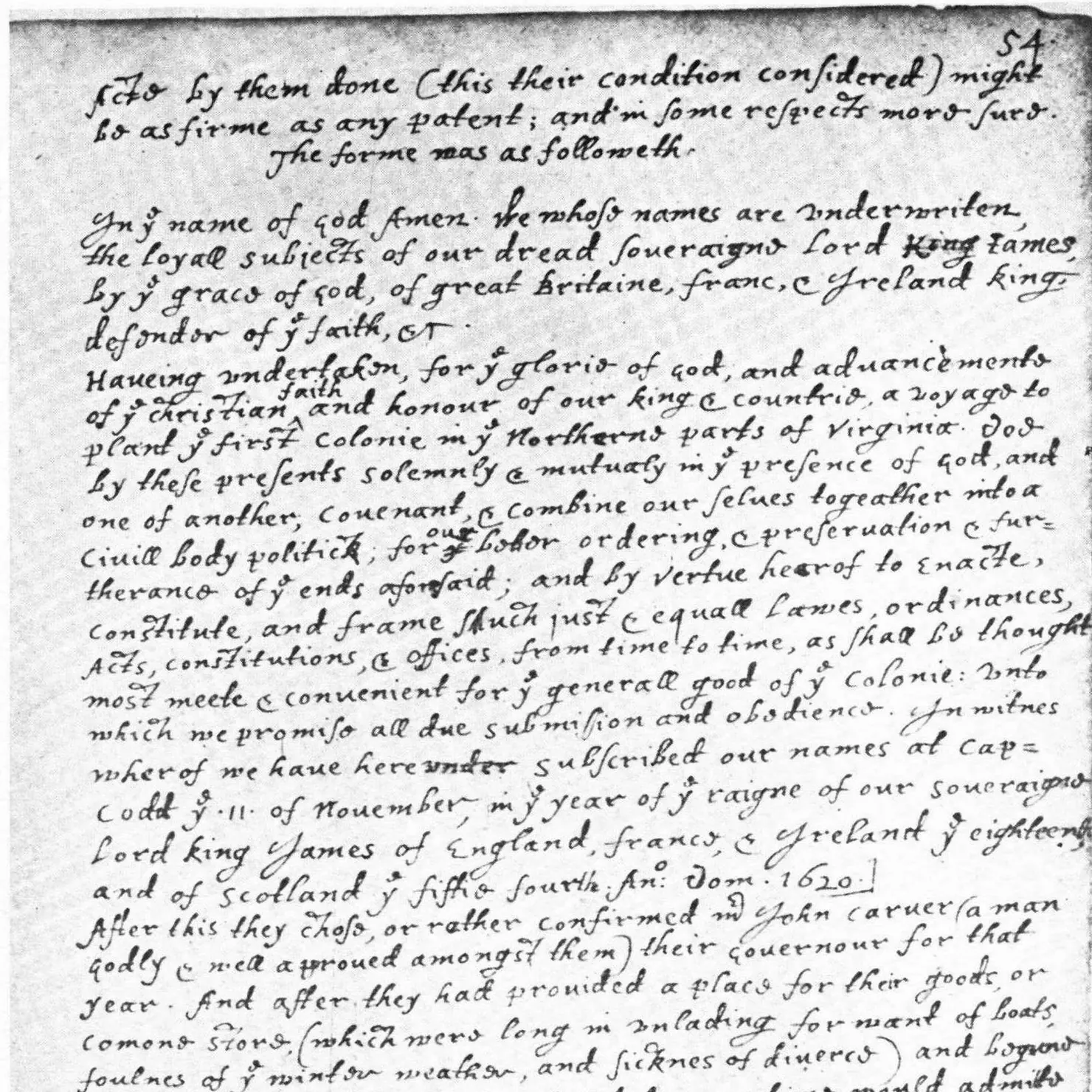
No charter they hold reaches this shore. So that day, before anyone lands, forty-one men sign a short agreement to govern themselves by consent.
“as firm as any patent, and in some respects more sure” Bradford
Dates are Old Style, as Bradford kept them: add ten days for today’s calendar. The course between the recorded points is a sketch, after S. E. Morison, who follows W. Sears Nickerson. Sources: S. E. Morison, “The Mayflower’s Destination, and the Pilgrim Fathers’ Patents,” Colonial Society of Massachusetts, 1951; William Bradford, Of Plimoth Plantation, Commonwealth edition, 1898; Mourt’s Relation, 1622; Pilgrim Hall Museum, the passengers; Pollock Rip; Provincetown, at 42° 03′ N. Coastline: Natural Earth.
Some aboard said that when they came ashore they would use their own liberty, “for none had power to command them.” They had a point. The patent was “for Virginia, and not for New England.”
So on 11 November, before anyone landed, forty-one men signed a short agreement. They would “covenant and combine” themselves into “a civil body politic,” make “just and equal laws” for “the general good of the Colony,” and obey them. They signed as loyal subjects of their king: self-government inside the larger law, not outside it.
Bradford wrote that such an act might be “as firm as any patent, and in some respects more sure,” and called it “the first foundation of their government in this place.”
A government can begin with a signature. Mayflower starts every community the same way: with a written compact, under federal and state law, that the people who live, build and invest there can read and rely on.
Sources: Bradford, Of Plimoth Plantation, quoted in modern spelling; Pilgrim Hall Museum, the Mayflower Compact and its forty-one signers; State Library of Massachusetts, the Bradford manuscript.
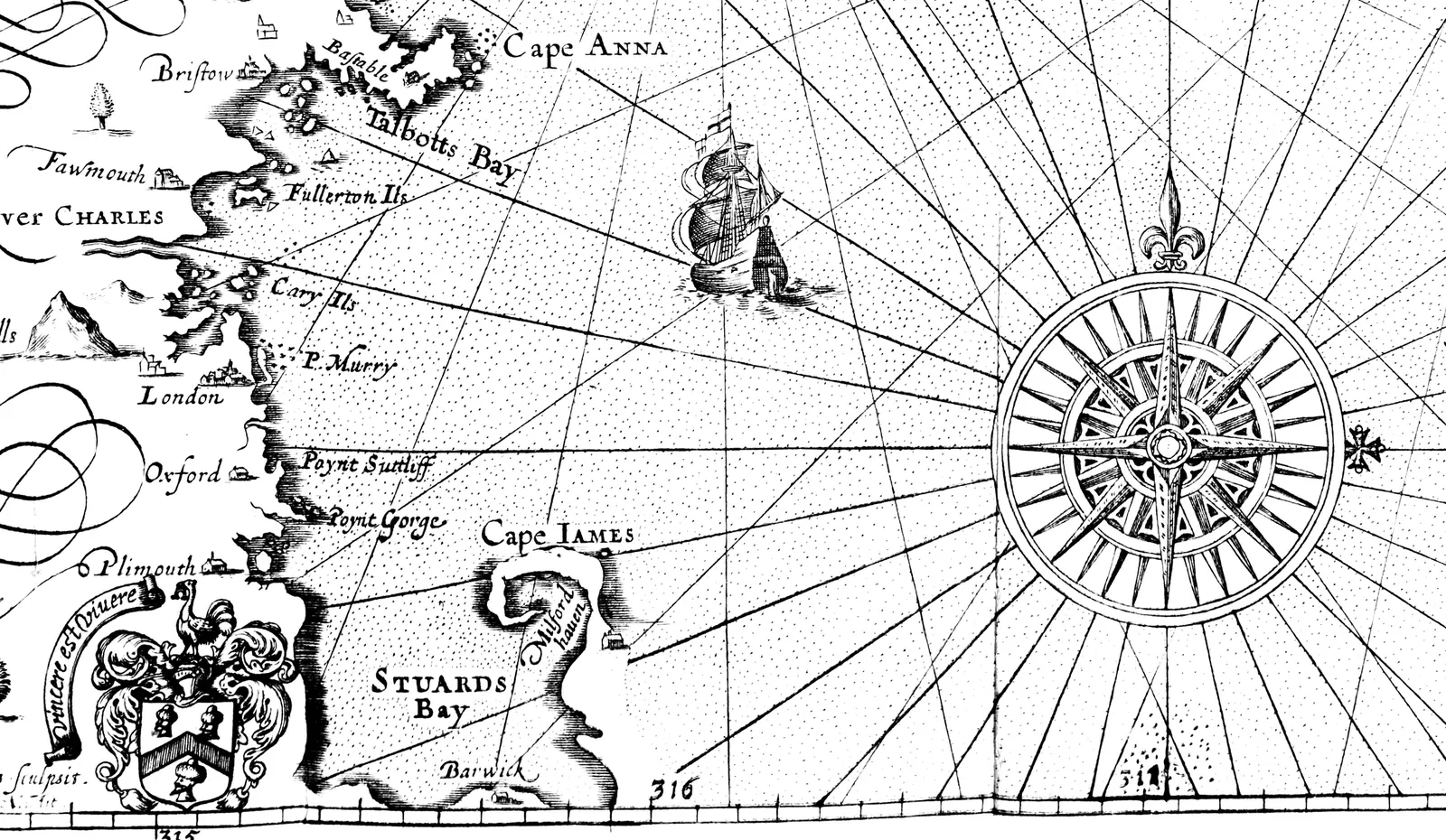
In December they crossed the bay to a harbor that John Smith’s map of 1616 already called Plimouth. The ground was not empty. It was Patuxet, a Wampanoag community almost emptied by the epidemics of 1616 to 1619, which many tribal communities remember as the Great Dying.
Half the company died that first winter. In March 1621 Ousamequin, the Massasoit or great sachem of the Wampanoag, came with sixty men and made a treaty with the English. Neither side would harm the other, and each would aid the other if attacked. Tisquantum, a man of Patuxet who had been carried away as a captive and had lived in England, interpreted, and showed the settlers how to set their corn and where to take fish.
The treaty lasted more than fifty years. The compact founded the colony. The kept peace let it live.
Sources: Morison, on the name Plymouth; Plimoth Patuxet Museums, Patuxet; Mourt’s Relation; United States Mint, the 1621 treaty.
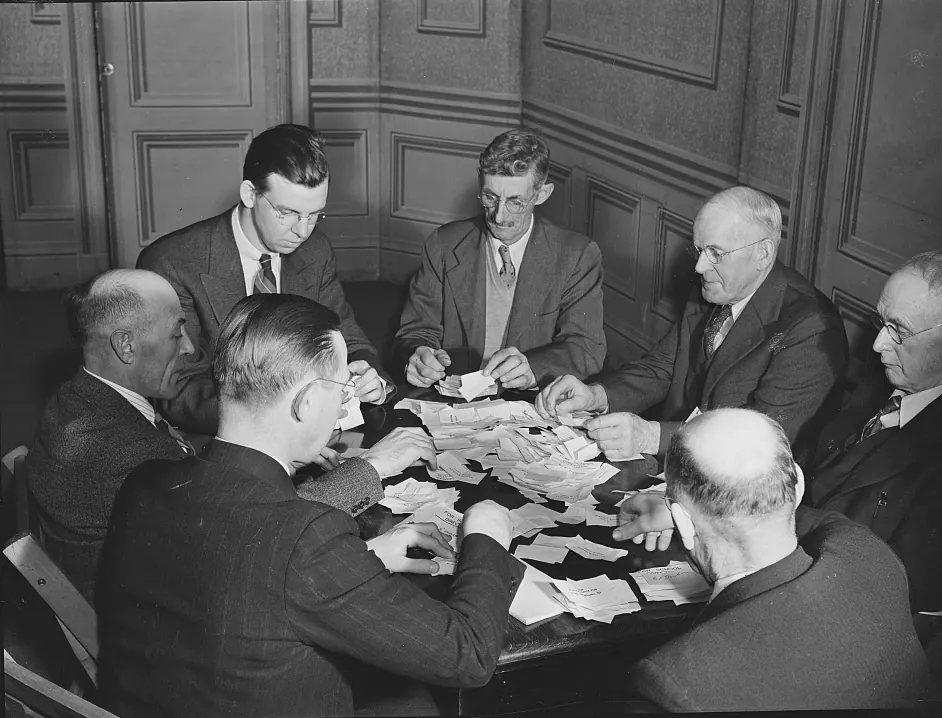
In November 1636 the governor, his assistants and men chosen from each town met, read the Compact again, and set down the colony’s laws. The first was that no law should be imposed on them “but such as shall be made or imposed by consent.” Each year the freemen chose a governor and his assistants, for one year and no more.
Across New England the habit took root in the town meeting: the voters of a town, assembled, electing officers and voting on taxes and spending. Many New England towns still govern themselves this way. In Vermont, Town Meeting Day, the first Tuesday in March, is a legal holiday.
Sources: Records of the Colony of New Plymouth, vol. 11, Laws, 1636; Encyclopaedia Britannica, town meeting; Vermont Statutes, 1 V.S.A. § 371.
In July 1787 the Confederation Congress adopted the Northwest Ordinance for the territory northwest of the Ohio River. It set out how that new ground would come to govern itself, in stages anyone could count. Its articles were “articles of compact between the original States and the people and States in the said territory,” to remain unalterable “unless by common consent.”
Five states were formed from that territory: Ohio, Indiana, Illinois, Michigan and Wisconsin. The same plan carried the country to the Pacific.
Sources: National Archives, the Northwest Ordinance, with transcript; Minnesota Secretary of State, the states formed from the territory.
Self-government grew in stages, against thresholds written down in advance.
The freedom cities idea asks a plain question. Why should new American communities not be founded the way the first ones were? On new ground. By consent. Under the Constitution and accountable to it, but free to build.
None of it sits outside the law. Plymouth governed itself as a loyal subject of its king. The territories governed themselves under Congress. A new community governs itself under the Constitution, “the supreme Law of the Land,” and under federal and state law. What it writes for itself is its compact.
The supreme law of the land. No local charter can set it aside.
Speech, worship, due process, equal protection and the vote, and the courts that guard them.
A community is chartered under them and answers to them.
Money, treaties, defense and the borders belong to the United States.
How officers are chosen, what they may do, and how they leave office.
Land, building and enterprise, within the room the law allows.
Mediation, arbitration and local courts, agreed before they are needed.
By the same consent that made it.
Source: Constitution of the United States, Article VI, National Archives transcript.

Charter design: a written constitution for the community, drafted with its founders, its landowners and the public bodies whose consent it needs. Who governs, by what rules, and how the rules change.
Access to a network of capital partners, committed in stages as the community meets milestones it has set for itself and can show.
A durability architecture agreed before ground is broken: development agreements, vested rights, dispute resolution and insurance, layered so that what is built does not rest on any one election.
Anchor enterprises, trades and the skilled people to run them, so the community can pay its own way.
The practice is old. The ground is new.
Every Mayflower engagement is led by a partner with standing in the United States, under a written mandate. It begins with a private conversation and a written scope.
Mayflower, a Mercatoria platform